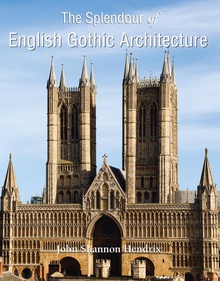
This book explains and celebrates the richness of Englishchurches and cathedrals, which have a major place inmedieval architecture. The English Gothic style developedsomewhat later than in France, but rapidly developed itsown architectural and ornamental codes. The author, John Shannon Hendrix, classifies English Gothic architecture in four principal stages: the early English Gothic, the decorated, the curvilinear, and the perpendicular Gothic. Several photographs of these architectural testimonies allow us to understand the whole originality of Britain during the Gothic era: in Canterbury, Wells, Lincoln, York, and Salisbury. The English Gothic architecture is a poetic one, speaking both to the senses and …
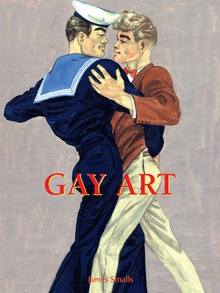
Ce livre n’est pas un panégyrique surl’homosexualité. C’est une étude scientifique menée par James Smalls, professeur d’histoire de l’art. Spécialiste de l’art du XIXe siècle européen, il s’intéresse particulièrement à la représentation de l’homosexualité dans l’art pictural et la photographie. En effet, cet ouvrage analyse l’acte de création et permet d’appréhender, sans aucune complaisance, l’apport de l’homosexualité dans l’évolution de la perception des émotions. À une époque où les tabous sont tombés, cette démonstration conduit à une relecture et une nouvelle compréhension des chefs-d’œuvre de notre civilisation.
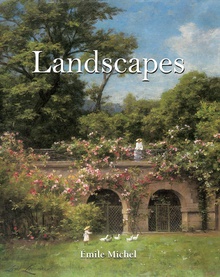
Although considered a minor genre for a long time, the art of landscape has risen above its forebears - religious and historic painting - to become a genre of its own. Giorgione in Italy, the Brueghels of the Flemish School, Claude Lorrain and Poussain of the French School, the Dutch landscape painters and Turner and Constable of England are just a few of the great landscapists who have left their indelible mark on the history of landscape and the art of painting as a whole. After serving for a long time as a backdrop for paintings and as a skill-practising …

Pierre-Auguste Renoir was born in Limoges on 25 February 1841. In 1854, the boy’s parents took him from school and found a place for him in the Lévy brothers’ workshop, where he was to learn to paint porcelain. Renoir’s younger brother Edmond had this to say this about the move: “From what he drew in charcoal on the walls, they concluded that he had the ability for an artist’s profession. That was how our parents came to put him to learn the trade of porcelain painter.” One of the Lévys’ workers, Emile Laporte, painted in oils in his spare time. …
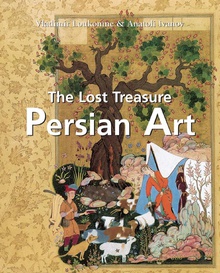
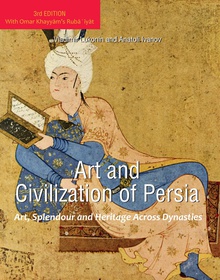
Housed in the Hermitage Museum along with other institutes, libraries, and museums in Russia and the republics of the former Soviet Union are some of the most magnificent treasures of Persian Art. For the most part, many of these works have been lost, but have been catalogued and published here for the first time with an unsurpassed selection of colour plates. In a comprehensive introduction, Vladimir Lukonin, Director of the Oriental Art section of the Hermitage Museum, and his colleague Anatoli Ivanov have broadly documented the major developments of Persian Art: from the first signs of civilisation on the plains …
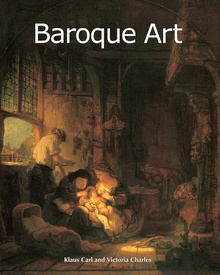
The Baroque period lasted from the beginning of the seventeenth century to the middle of the eighteenth century. Baroque art was artists’ response to the Catholic Church’s demand for solemn grandeur following the Council of Trent, and through its monumentality and grandiloquence it seduced the great European courts. Amongst the Baroque arts, architecture has, without doubt, left the greatest mark in Europe: the continent is dotted with magnificent Baroque churches and palaces, commissioned by patrons at the height of their power. The works of Gian Lorenzo Bernini of the Southern School and Peter Paul Rubens of the Northern School alone …

Dürer is the greatest of German artists and most representative of the German mind. He, like Leonardo, was a man of striking physical attractiveness, great charm of manner and conversation, and mental accomplishment, being well grounded in the sciences and mathematics of the day. His skill in draughtsmanship was extraordinary; Dürer is even more celebrated for his engravings on wood and copper than for his paintings. With both, the skill of his hand was at the service of the most minute observation and analytical research into the character and structure of form. Dürer, however, had not the feeling for abstract …
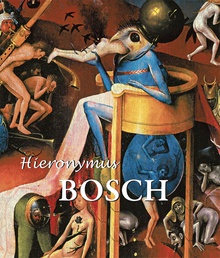
Lang vor der Erfindung von neuen, mit exotischen Monstern gespickten Medien wie Comics und Computerspielen zeigte der niederländische Maler Hieronymus Bosch in seinen Gemälden, oft mit einer Prise Humor verbunden, eine große Anzahl von schrecklichen, wahrlich Furcht einflößenden Fantasiewesen, wie sie ausgefallener nicht hätten sein können. Aus seiner Malerei resultiert eine lange Diskussion über den Wahnsinn der vom rechten Weg abgekommenen Menschen, die die Weisungen Christi ignoriert hatten. Hieronymus Bosch (ca. 1450-1516) lebte in einer Welt, die sich durch den immer größeren Einfluss der Renaissance und der Religionskämpfe grundlegend verändert hat. In bildhafter Form werden das Paradies und die Hölle …
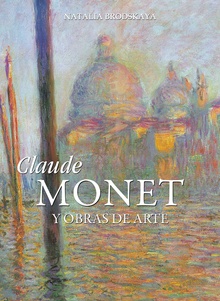
Para Claude Monet, el que se le considerara “impresionista” fue siempre un motivo de orgullo. A pesar de todas las críticas que se han hecho a su trabajo, siguió siendo un verdadero impresionista hasta el final de su muy larga vida. Lo era por convicción profunda y, por el impresionismo, pudo haber sacrificado muchas otras oportunidades que su inmenso talento le ofrecía. Monet no pintaba composiciones clásicas con figuras y nunca fue retratista, aunque su entrenamiento profesional incluía estas habilidades. Eligió un solo género y lo hizo suyo: el paisajismo, y en él logró un grado de perfección que ninguno …
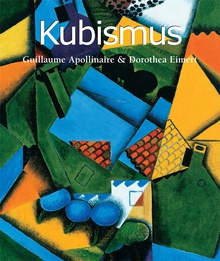
Les Demoiselles d'Avignon: fünf junge Damen, die die moderne Kunst für immer verändern sollten. Gesichter, die man gleichzeitig von vorn und im Profil erkennt, verwinkelte Körper, deren üppige Formen hinter asymmetrischen Linien verschwinden - mit diesem Gemälde revolutionierte Picasso die Geschichte der Malerei. 1907 war der Kubismus geboren. Kubistische Maler wie Juan Gris und Robert Delaunay, die, inspiriert von Braque und Picasso, natürliche Formen in Würfel und Zylinder verwandelten, lieferten eine neue, in völligem Gegensatz zum Impressionismus stehende Weltanschauung. Der Kubismus verbreitete sich schnell in Europa und entwickelte sich in verschiedenen Phasen, die der Kunstgeschichte den Reichtum des 20. Jahrhunderts …
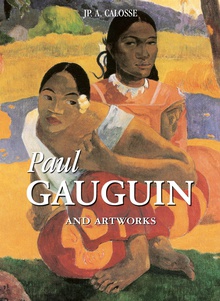
Paul Gauguin was first a sailor, then a successful stockbroker in Paris. In 1874 he began to paint at weekends as a Sunday painter. Nine years later, after a stock-market crash, he felt confident of his ability to earn a living for his family by painting and he resigned his position and took up the painter’s brush full time. Following the lead of Cézanne, Gauguin painted still-lifes from the very beginning of his artistic career. He even owned a still-life by Cézanne, which is shown in Gauguin’s painting Portrait of Marie Lagadu. The year 1891 was crucial for Gauguin. In …
Utilizamos cookies propias y de terceros para mejorar su experiencia y nuestros servicios analizando su navegación en nuestra web y cómo interactúa con nosotros y poder mostrarle publicidad en función de sus hábitos de navegación. Para consentir su utilización, pulse el botón “Acepto”. Puede obtener más información consultando nuestra Política de Cookies.