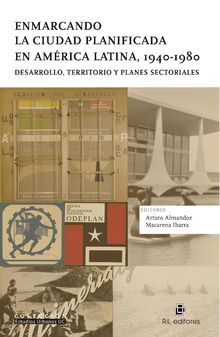
Este libro continúa y amplía el estudio sobre el período de emergencia disciplinaria en la región. Los ejes temáticos se basan en los cambios políticos, económicos, territoriales y disciplinarios que ocurrieron entre la segunda posguerra y la década de 1980. El desarrollo económico, impulsado por la industrialización por sustitución de importaciones y los lineamientos de la Cepal, estuvo influenciado por el nacionalismo económico y se buscó a través de la infraestructura territorial y la planificación nacional. Casos de estudio de países urbanizados y dinámicos como Argentina, Brasil, Chile, Colombia, México, Uruguay y Venezuela ilustran este contexto.

At the beginning of the XXth century, there was an unprecedented explosion of creativity in all artistic fields. Overwhelming both Europe and North America, the Russian Ballet revolutionized theatrical design with their stage sets and their costumes that were ablaze with colour yet refind in effect, bearing much of the mystic of the Orient yet also visually influenced by the work of the Persian miniaturists. Together with Diaghilev, Léon Bakst showed himself to be the most talented of the theatre group designers of his time. The costumes he devised with exclusive art seemed to shimmer with a thousand colours. Dazzled …
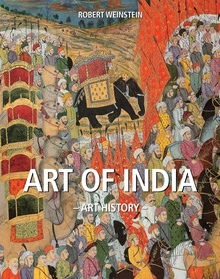
India, with its extensive and colourful history, has produced an artistic tradition in many forms. Architecture, painting, sculpture, calligraphy, mosaics, and artisan products all display the country's cultural, religious, and philosophical richness. From Hinduism, with its pantheon of imagery of gods, goddesses, animals, and many other figures, to Islam, with its astounding architecture and intricate calligraphy; the many facets of India have given rise to a fascinating and beautiful collection of artworks. Featuring incredible images and a text written by a renowned scholar on the subject, this work offers an in-depth look at the masterpieces of India, showcasing this fascinating …

Bangkok by night draws its lifeblood from the realms of the steamy and the seamy. The capital of Thailand is world-famous for its innumerable massage parlours, yet at the same time the city is rich in historical treasures. Some of its Buddhist temples are more than 400 years old, and contrast strangely with Bangkok’s otherwise cutting-edge modernity. Its unique charm stems also from the winding presence of the Chao Phraya river, a waterway that can hardly be seen due to the multitude of small vessels that ply up and down it daily carrying a vast horde of passengers and goods, …
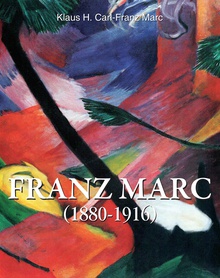
Franz Marc (1880-1916) was a key figure in the German Expressionist movement of the early 20th century. Marc was a founding member of the expressionist group Der Blaue Reiter along with other great artists of the time: Wassily Kandinsky, August Macke, and Alexej von Jawlensky. A brilliant use of colour along with stark futurist and cubist styles create the distinct qualities that make Marc a master of modern art. Symbolising masculinity, femininity, and violence among his calm and bucolic animal subjects, Marc's unique and creative use of colour and meaning will forever have a firm place in art history.

Art Nouveau designates a decorative and architectural style developed in the 1880s and 1890s in the West. Born in reaction to the Industrial Revolution and to the creative vacuum it left behind, Art Nouveau was at the heart of a "renaissance" in the decorative arts. The primary objective of the movement was the creation of a new aesthetic of nature through a return to the study of natural subjects. In order to achieve this, such artists as Gustav Klimt, Koloman Moser, Antoni Gaudí, Jan Toorop, and William Morris favoured innovation in technique and novelty of forms. After its triumph at …

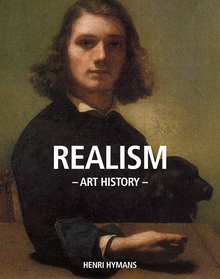
From a historical perspective, Realism stands as a pivotal reaction against the extravagances of Romanticism, emerging in a time rife with social and political upheaval brought about by the Industrial Revolution. Artists like Gustave Courbet, the movement’s vanguard, along with Jean-Baptiste Corot, Honoré Daumier, Henri Fantin-Latour, Édouard Manet, and Jean-François Millet, shifted the artistic lens from the fantastic to the tangible, painting the world around them with unprecedented fidelity. These pioneers, renowned for their depictions of everyday life and social commentary, employed innovative techniques to capture the light, texture, and movement of the real world. Their works, often categorised under …

Consolidated by the Norsemen in 841, Dublin became the capital of the Republic of Ireland (Eire) when the country gained formal independence in 1922. It is primarily an industrial city, and boasts distilleries, breweries and flour-mills among the more scenic delights that include the Tobacco Factory, the Customhouse, the 13th-century St Patrick's Cathedral and the Gothic-style Catholic church of St Audoen. As shown by the author, Ingo Latotzki, Dublin remains a city that is both poetic and tragic. It was here that Irishmen determined to achieve national independence instigated the Easter Rising of April 1916, an attempt at a revolt …
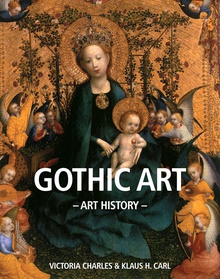
Gothic art finds its roots in the powerful architecture of the cathedrals of northern France. It is a medieval art movement that evolved throughout Europe for more than 200 years. Leaving curved Roman forms behind, the architects started using flying buttresses and pointed arches to open cathedrals to the daylight. A period of great economic and social change, the gothic era also saw the development of a new iconography celebrating the Holy Mary, in contrast to the fearful themes of dark Roman times. Full of rich changes in all the different arts (architecture, sculpture, painting, etc.), Gothic art gave way …

Utilizamos cookies propias y de terceros para mejorar su experiencia y nuestros servicios analizando su navegación en nuestra web y cómo interactúa con nosotros y poder mostrarle publicidad en función de sus hábitos de navegación. Para consentir su utilización, pulse el botón “Acepto”. Puede obtener más información consultando nuestra Política de Cookies.