
The lighthouse, an indefatigable watchman, ceaselessly guides boats to their ports.This beacon of maritime signalisation has guided sailors since antiquity.The first known lighthouse appeared on the island of Pharos, and was the remarkable Lighthouse of Alexandria; however, it seems that volcanoes like Stromboli and its frequent eruptions were possibly at the origin of this invention, as the fires guided boats to their shores. Faced with the increasing development of modern navigational aids, these lone sentinels do not hold the same functional importance today. However, this work emphasises not only their role as a major architectural development, but also the place …

A symbol of massive crowds and solitary desires, the city holds promise for all those that pass through it. Its meandering streets, unexplored neighbourhoods and incessant noise create a landscape that captivates the observer. The lights of the city can conceal or reveal it, transforming its appearance hour by hour, offering countless facets to the passerby. While the light of morning pulls the city from its torpor and renews it for the dawning day, the nocturnal illumination plunges the pedestrian into the strangeness of its mysteries, creating a striking and ephemeral beauty. Between the shadow and the light, these original …

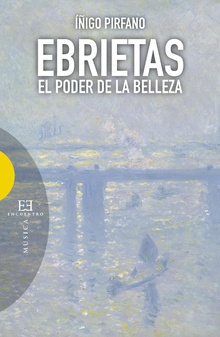
Cuando un filósofo escribe sobre estética, el resultado constituye en no pocos casos un ejercicio de admirable erudición que no consigue penetrar en la naturaleza de la creación poética. Y al revés; si un artista se lanza a la difícil tarea de describir unos procesos creativos con los que está realmente familiarizado, su fruto carece frecuentemente de profundidad especulativa. La visión que el presente ensayo aporta sobre el arte y la belleza, se asienta sobre una concepción antropológica profundamente humana, anclada en la persuasión de la dignidad e irrepetibilidad de cada persona. El enfoque de la cuestión -que se podría …
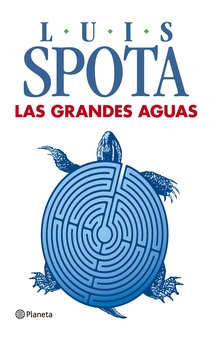
En la selva del sur de Tamaulipas un camión con dos toneladas de dinamita arde y amenaza con acabar con el campamento de trabajadores que construye la presa y con los habitantes de la zona. Carlos Rivas, el ingeniero responsable de la construcción, se ve obligado a elegir entre su «código del deber» y la seguridad de los empleados, la construcción de la presa o la vida de su pequeño hijo. Un intenso drama que, en medio de adversidades sin tregua, replantea los más elementales valores humanos.

El cine de América Latina ha sido extensamente subvalorado en la literatura sobre cine. Cualquiera sea el texto de historia o de crítica que se consulte, no se hallará sino unas pocas páginas dedicadas a una producción que, en su conjunto, estuvo durante un par de décadas entre las más voluminosas del mundo. Este libro viene a ser una reivindicación de esa poderosa filmografía, llena de gemas secretas u olvidadadas, que germinó entre los países líderes, Argentina, Brasil y México, y que se extendió también por Bolivia, Chile, Colombia, Ecuador, Paraguay, Perú, Uruguay, Venzuela, Cuba y Centroamérica. El profesor, crítico …

Le Bauhaus est une des émergences culturelles les plus importantes et conséquentes du siècle. Walter Gropius fonda cet institut de design en 1919, à Weimar. L’école fut effective à Weimar, Dessau et Berlin. Les enseignements du Bauhaus en design sont aujourd’hui encore respectée dans les écoles de design et d’architecture. Les produits du Bauhaus sont devenus des standards du design et les immeubles du Bauhaus sont entrés dans l’histoire et au patrimoine culturel mondial de l’UNESCO. Ce livre, richement illustré et documenté, offre une vue globale de l’histoire du Bauhaus et projette un nouvel éclairage sur son évolution et sa …
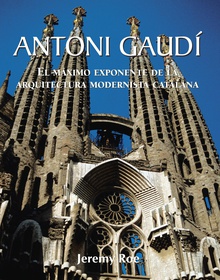
El arquitecto y diseñador español Antoni Gaudí (1852-1926) es una importante e influyente figura en la historia del arte contemporáneo de España. El uso del color, la utilización de diferentes materiales y la introducción de movimiento en sus construcciones fueron toda una innovación en el terreno de la arquitectura. En su diario, Gaudí expresó sus propios sentimientos sobre el arte: “los colores usados en arquitectura tienen que ser intensos, lógicos y fértiles”. El autor, Jeremy Roe, utiliza una amplia gama de detalles fotográficos y arquitectónicos que le permiten revelar el contexto del arte de Barcelona mientras nos introduce en el …
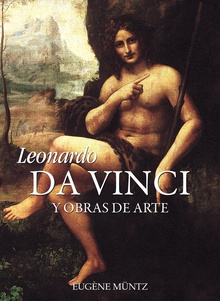
Leonardo pasó los primeros años de su vida en Florencia, su madurez en Milán y los últimos tres años de su existencia en Francia. El maestro de Leonardo fue Verrocchio. Primero fue orfebre, luego pintor y escultor: como pintor, fue representante de la escuela científica del dibujo; más famoso como escultor con la estatua Colleoni en Venecia, Leonardo fue además un hombre de gran atractivo físico, encantador en sus modales y conversación y poseedor un intelecto superior. Era versado en las ciencias y las matemáticas de su época, además de ser un músico de grandes dotes. Su habilidad como dibujante …

In 1905 Georgia travelled to Chicago to study painting at the Art Institute of Chicago. In 1907 she enrolled at the Art Students’ League in New York City, where she studied with William Merritt Chase. During her time in New York she became familiar with the 291 Gallery owned by her future husband, photographer Alfred Stieglitz. In 1912, she and her sisters studied at university with Alon Bement, who employed a somewhat revolutionary method in art instruction originally conceived by Arthur Wesley Dow. In Bement’s class, the students did not mechanically copy nature, but instead were taught the principles of …
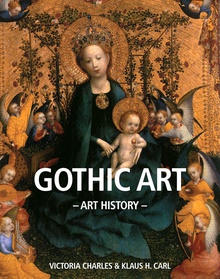
Gothic art finds its roots in the powerful architecture of the cathedrals of northern France. It is a medieval art movement that evolved throughout Europe for more than 200 years. Leaving curved Roman forms behind, the architects started using flying buttresses and pointed arches to open cathedrals to the daylight. A period of great economic and social change, the gothic era also saw the development of a new iconography celebrating the Holy Mary, in contrast to the fearful themes of dark Roman times. Full of rich changes in all the different arts (architecture, sculpture, painting, etc.), Gothic art gave way …
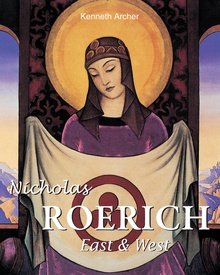
Nicholas Roerich, with his huge and versatile talent, is one of the most interesting creative minds of the early 20th century. He was born in Saint Petersburg in 1874 and died in Kulu Valley (India) in 1947. After studying law and attending the Academy of Art, Nicholas Roerich developed a passionate interest in archaeology, a contribution that was acknowledged when he became a lecturer at the Russian Archaeological Society in 1900. His extensive travels in Europe, Russia, Asia and especially India were a source of inspiration wholly original and unique (for more than 7000 paintings). Roerich was also the author …
Utilizamos cookies propias y de terceros para mejorar su experiencia y nuestros servicios analizando su navegación en nuestra web y cómo interactúa con nosotros y poder mostrarle publicidad en función de sus hábitos de navegación. Para consentir su utilización, pulse el botón “Acepto”. Puede obtener más información consultando nuestra Política de Cookies.